Visualizzazione post con etichetta #imageprocessing. Mostra tutti i post

sabato 20 maggio 2023

Elaborazione automatica di immagini.


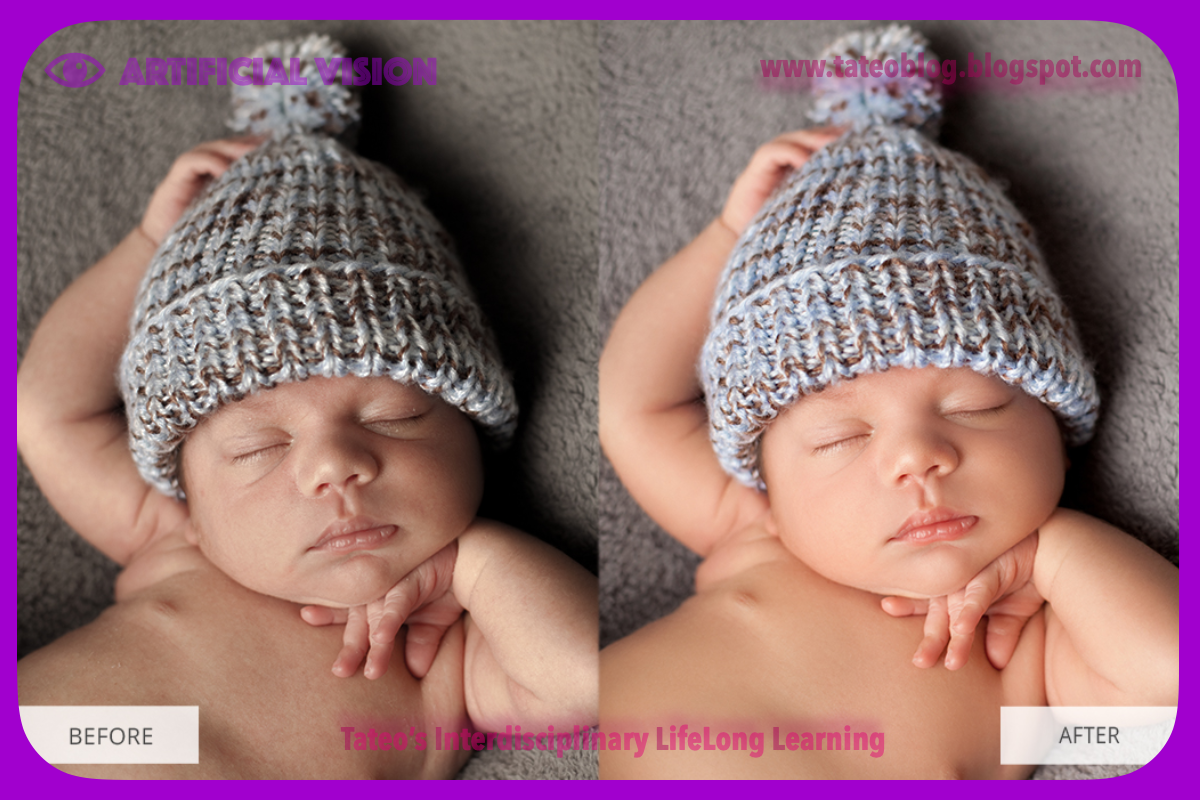
Oggi siamo pervasi da immagini (#images), provenienti dalle più disparate fonti, quali per esempio i satelliti, gli smartphone, telecamere di video sorveglianza, social media, dispositivi medicali, telecamere di ispezione industriale, ecc. Le immagini sono così numerose che occorre un meccanismo automatico (#automatic) per processare (#imageProcessing) tutte al fine di individuare all'interno di esse informazioni importanti nel più breve tempo possibile. E questo meccanismo, oltre al vantaggio di essere automatico, ha anche il vantaggio di essere instancabile, ossia di essere in grado di lavorare più a lungo delle 8 ore al giorno, cinque giorni alla settimana (#availability), che è quanto è in grado di garantire un lavoratore umano. 


"#readings #machineVision #imageProcessing #computerVision


https://tateoblog.blogspot.com/p/p_3.html

SCIENCE (LT.5) - §3.8.2. A tutorial on Image Processing"


(A tutorial on image processing, Visilog software, Noesis, 1991)


sabato 16 luglio 2022

Image Processing.

Elaborazione di immagini.


Image Processing is a useful practice to perform some operations on a digital image, in order to get an enhanced image, or to extract some useful information from it for specific purposes. From the mathematical point of view, Image Processing is a type of signal processing in which input is an image and output may be image or a characteristics/features associated with input image. 
L'elaborazione delle immagini (Image Processing in lingua inglese) è una pratica utile per eseguire alcune operazioni su un'immagine digitale, al fine di ottenere un'immagine migliorata, o per estrarne alcune informazioni utili per scopi specifici. Dal punto di vista matematico, Image Processing è un tipo di elaborazione del segnale in cui l'ingresso è un'immagine e l'uscita può essere un'immagine o una caratteristica/caratteristica associata all'immagine di ingresso

With the evolution of electronic computing technologies, these operations are carried out automatically by suitably programmed and trained electronic computers.
Con l'evoluzione delle tecnologie di calcolo elettronico queste operazioni sono svolte in modo automatico da calcolatori elettronici opportunamente programmati ed addestrati.

Hashtag keywords: #computerVision #imageProcessing #imageEnhancement #imageMakeSense #TateoBlog #TILLL

Extract from"Image Processing."TILLL-Learning
-----------------------------------------

Published July 15, 2022

into the Blog section of

TILLL

the Lifelong and Interdisciplinary Learning project of Giovanni Battista Tateo

lunedì 4 ottobre 2021

The visualization of the image processing results

{La visualizzazione dei risultati della elaborazione delle immagini}


  Once the images have been processed by the processing subsystem, the results must be communicated externally.
  {Una volta che le immagini sono state elaborate dal sottosistema di elaborazione i risultati devono essere comunicate all'esterno}

  Visualization subsystem. The visualization subsystem is the stage of the artificial vision system that takes care of the communication of the results. Generally this stage is composed of a graphic output device, such as a monitor. The content and style of information presentation must be commensurate with the user who is often the end user of the control chain. For this reason the information provided must be concise, essential, and free from the technicalities of image processing technology. It is also advisable to use any stratagem to facilitate its use by the user, such as using colors or styles to emphasize particular conditions.
  {Sottosistema di visualizzazione. Il sottosistema di visualizzazione è lo stadio del sistema di visione artificiale che si prende carico della comunicazione dei risultati. Generalmente questo stadio è composto da un dispositivo grafico di output, come per esempio un monitor. Il contenuto e lo stile di esposizione delle informazioni deve essere commisurato al fruitore che spesso è l'utente finale della catena di controllo. Per questo motivo le informazioni fornite devono essere sintetiche, essenziali, e prive dei tecnicismi propri della tecnologia di elaborazione delle immagini. E' consigliabile anche utilizzare qualsiasi stratagemma per facilitarne la fruizione da parte dell'utente, come per esempio usare colori o stili per enfatizzare particolari condizioni}

  Augmented Reality. Since the information you provide is related to the acquired images, then when there is a continuous flow of images, i.e. a video to be clear, it may be useful to view the information overlaid (overlay) to the images that generated them, in order to allow an immediate comparison between raw data (RAW data) and result of the processing. This technique is at the basis of the emerging technologies of Augmented Reality (AR), whose principle is precisely to add other related information to the image, in order to increase its informative content. 
  {Augmented Reality. Poiché le informazioni che si forniscono sono relative alle immagini acquisite, allora quando si ha un flusso continuo di immagini, ossia un video per intenderci, può essere utile visualizzare le informazioni sovrapposte (overlay) alle immagini che le hanno generate, in modo da permettere un riscontro immediato tra dato grezzo (RAW data) e risultato della elaborazione. Questa tecnica è alla base della tecnologie emergente della Realtà Aumentata (AR), il cui principio è, per l'appunto quello di aggiungere alla immagine altre informazioni correlate, al fine di aumentarne il contenuto informativo}

  Application to Railway Diagnostics. A demonstration of the effectiveness of this visualization technique is represented by an image processing system that I created for the diagnostic control of the mechanical systems for anchoring the rails to the sleepers. The acquisition system consists of a line-by-line scan of the railway's ground infrastructure. The images thus obtained are processed to detect possible anomalies of the infrastructure, such as the lack of a fastening component. Now, while viewing the images acquired and processed in (almost) real-time it is useful to receive, superimposed on the image, also the results of the processing. If the overlapping information is appropriately highlighted with the use of color, then its use becomes simplified and effective, even if the frame rate is high.
  {Applicazione alla Diagnostica Ferroviaria. Una dimostrazione della efficacia di questa tecnica di visualizzazione è rappresentata da un sistema di elaborazione di immagini che ho realizzato per la il controllo diagnostico dei sistemi meccanici di ancoraggio delle rotaie alle traversine. Il sistema di acquisizione consiste nella scansione linea-per-linea della infrastruttura di terra della ferrovia. Le immagini così ottenute sono elaborate per rilevare possibili anomalie della infrastruttura, come per esempio la mancanza di un componente di ancoraggio (fastening). Orbene, durante la visione delle immagini acquisite ed elaborate in (quasi) real-time è utile ricevere, sovrapposta alla immagine, anche i risultati della elaborazione. Se poi le informazioni sovrapposte sono opportunamente evidenziate con l'uso del colore, allora la fruizione delle stesse diventa semplificata ed efficace, anche se il frame rate è elevato}

  Computer vision. Sometimes the complexity of the information to be displayed is such as to require technical specifications for their display by means of digital displays. Think for example of the representation of complex three-dimensional objects. For these particular representations of the data and results produced by a vision system, the Computer Vision technique is used.
  {Computer vision. Talvolta la complessità delle informazioni da visualizzare è tale da richiedere specifiche tecniche per la loro visualizzazione per mezzo di visualizzatori digitali. Si pensi ad esempio alla rappresentazione di oggetti tridimensionali complessi. Per queste particolari rappresentazioni dei dati e dei risultati prodotti da un sistema di visione si fa ricorso alla tecnica di Computer Vision}

Hashtag keywords: #computerVision #artificialVision #imageProcessing #computerVision #augmentedReality #TateoBlog #TILLL


Extract fromThe reproduction of the human vision by means of an artificial systemTILLL-Learning


_____________________________________________________________________________

 Tateo’s Interdisciplinary Lifelong Learning Project

T I L L L

LEARNING - BLOG - COMMUNITY

Learning, knowledge sharing and Communities engagement about: Artificial Intelligence, Augmented / Virtual / Mixed Reality, Automation, Electronics, Computer Science and Information Technology, Mobile Devices, Problem Solving, Readings, Social Media, Simulation, Artificial Vision, Work and Soft Skills

by Tateo Giovanni Battista

_____________________________________________________________________________

TILLL~Blog © October 3, 2021

lunedì 30 novembre 2020

Image Processing

 {Elaborazione di Immagini}


Hashtag keywords: #artificialVision #computerVision #imageProcessing #machineVision #TateoBlog #TILLL

The processing subsystem of an artificial vision system basically consists of an electronic processor and an algorithm coded in a software program. The algorithm is suitably designed to process the images produced by the acquisition subsystem, in order to give them meaning, that is, to extract from them the information useful for the purpose for which the artificial vision system was built. Depending on the information you want to extract from the images, there are specific processing techniques.

{ Il sottosistema di elaborazione di un sistema di visione artificiale è costituito fondamentalmente da un elaboratore elettronico e da un algoritmo codificato in un programma software. L'algoritmo è progettato opportunamente per elaborare le immagini prodotte dal sottosistema di acquisizione, al fine di  dare ad esse significato, ossia per estrarne da essa le informazioni utili allo scopo per cui è stato costruito il sistema di visione artificiale. A seconda delle informazioni che si desidera estrarre dalle immagini, esistono specifiche tecniche di elaborazione. } 


In order to read the related entire article, follow the below link: 

{ Per leggere l'intero articolo a riguardo, segui il collegamento qui sotto: } 


IMAGE PROCESSING

{ Elaborazione di Immagini }

VS.2 )


by:

Tateo~Blog

Interdisciplinary Lifelong Learning (>) and Web-based Knowledge Sharing (>) 

about the following topics:

::: Artificial Intelligence (AI) ::: Augmented, Virtual and Mixed Reality (AR) ::: Automation (AU) ::: Electronics (EL) ::: Information Technology (IT) ::: Mobile Devices (MD) ::: Problem Solving (PS) ::: Readings (LT) ::: Social Media (SM) ::: Simulation (SZ) ::: Artificial Vision (VS) ::: Work Skills (WS) :::


Tateo~Blog © 30 November 2020

domenica 31 maggio 2020

The Image Processing subsystem of an Artificial Vision system

{ Il sottosistema di elaborazione di un sistema di visione artificiale  }

#TateoBlog #artificialVision #machineVision #imageProcessing #computerVision #featureExtraction #regionDetection #regionSegmentation #patternRecognition #ocr #gauging

The processing subsystem of an artificial vision system basically consists of an electronic processor and an algorithm coded in a software program. The algorithm is suitably designed to process the images produced by the acquisition subsystem, in order to give them meaning, that is, to extract from them the information useful for the purpose for which the artificial vision system was built. Depending on the information you want to extract from the images, there are specific processing techniques.

{ Il sottosistema di elaborazione di un sistema di visione artificiale è costituito fondamentalmente da un elaboratore elettronico e da un algoritmo codificato in un programma software. L'algoritmo è progettato opportunamente per elaborare le immagini prodotte dal sottosistema di acquisizione, al fine di  dare ad esse significato, ossia per estrarne da essa le informazioni utili allo scopo per cui è stato costruito il sistema di visione artificiale. A seconda delle informazioni che si desidera estrarre dalle immagini, esistono specifiche tecniche di elaborazione. }

In order to read the related entire article, follow the below link: 
{ Per leggere l'intero articolo a riguardo, segui il collegamento qui sotto: } 
VS.2. IMAGE PROCESSING > )

———————————————————————————————————————————————————
Interdisciplinary Lifelong Learning and Web-based Knowledge Sharing about the following topics:
 Artificial Intelligence ~ Augmented / Virtual Reality ~ Automation ~ Electronics ~ Literature ~ Information Technology ~ Mobile Devices ~ Problem Management ~ Social Media ~ Simulation ~ Artificial Vision ~ Work Skills 
———————————————————————————————————————————————————

sabato 30 maggio 2020

SMM, that is: how to work in the Social Media era

{ Il Social Media Management, ossia: come lavorare nell’era dei Social Media } 


#TateoBlog #workSkills #socialMedia #awareness #brand #seo #storytelling #dataAnalysis  #photography #photoshop #imageProcessing #creativity  #softSkills #projectManagement #lifelongLearning #future

The appearance of Social Media has redesigned the world of work, defining new professional skills that must be developed to work effectively and productively with these new communication tools, which cannot be ignored. I suggest that we briefly review the main of these professional skills to verify which of them are already part of our background and which ones we must acquire to keep up with the times.

{ La comparsa dei Social Media ha ridisegnato il mondo del lavoro, definendo nuove competenze professionali che è necessario sviluppare per lavorare in modo efficace e produttivo con questi nuovi strumenti di comunicazione, da cui non si può prescindere. Vi suggerisco di passiamo in rassegna brevemente le principali di queste competenze professionali per verificare quali di esse fanno già parte del nostro background e quali invece dobbiamo acquisire per metterci al passo con i tempi. }

https://tateoblog.blogspot.com/p/p_23.html

The various types of Augmented Reality

{ I vari tipi di Realtà Aumentata }

#TateoBlog #AR #AugmentedReality #ARtags #imageProcessing #patternRecognition #3D #GPS

How can an Augmented Reality (AR) application be implemented? We basically distinguish three categories of AR applications, in relation to the strategy followed and the corresponding technical solution. There is a first class of applications which is based on the "projection" of information within the image that takes up the surrounding environment. A second solution is based instead on the "recognition" of a marker within the scene. Finally, a third solution is based on the "position" of the mobile device which is used to use AR technology.

{ Come può essere implementato una applicazione di Realtà Aumentata (AR)? Distinguiamo fondamentalmente tre categorie di applicazioni di AR, in relazione alla strategia seguita ed alla corrispondente soluzione tecnica. Esiste una prima classe di applicazioni che è basata sulla “proiezione” delle informazioni all’interno della immagine che riprende l’ambiente circostante. Una seconda soluzione è basata invece sul “riconoscimento” di un marker all’interno della scena. Ed infine una terza soluzione è basata sulla “posizione” del dispositivo mobile che è utilizzato per fruire della tecnologia AR. }

sabato 23 novembre 2019

The image acquisition stage of an artificial vision system

{Lo stadio di acquisizione delle immagini di un sistema di visione artificiale}
 

#ArtificialVision, #ComputerVision, #FrameGrabber, #ImageAcquisition, #ImageProcessing, #ImageSensor, #Imaging, #Lighting, #MachineVision, #Optics

Generally the acquisition unit of an artificial vision system, commonly synthetically identified also with the term of "imaging unit", is basically composed of an illumination device, an optical assembly, a camera and an electronic acquisition board, commonly called "frame grabber” and mounted within an electronic computer. The illumination device task is to lighting the object of interest with a specific and controlled light radiation. The optical assembly provides the adequate visual coupling between the camera and the object of interest, so that the object is completely framed (field of view) and has the correct contrast and optical focusing conditions. The camera contains the electronic sensor able to capture the light radiations that contains the information on the image and therefore that on the real object framed by the entire vision system. The frame grabber has the task to format the image captured by the camera in a format that enable it to be stored and processed within the electronic computer that host it. Depending on the specific purposes of the vision application, acquisition techniques may vary. In particular, the number, size and technology of the sensors chosen may vary. The most common configurations of the acquisition unit are the following: the acquisition of two-dimensional images (briefly 2D) in the visible optical field; acquisition of thermal images contained in the infrared optical range (briefly IR); acquisition of vector images (named scan lines) that are useful for processing of continue images (named web inspection); acquisition of three-dimensional images (briefly 3D) using for example the so that "laser ranging technique" based on profilometric principle, or the "time of flight" (briefly ToF) technique, or the photogrammetric one; and finally the image acquisition based on X-ray.

Lo stadio di acquisizione delle immagini di un sistemati visione artificiale. In genere il l'unità di acquisizione delle immagini di un sistema di visione artificiale, comunemente identificato col termine inglese di "Imaging unit", è composto da un dispositivo di illuminazione, un gruppo ottico, una telecamera ed una scheda elettronica di acquisizione, comunemente detta in lingua inglese "frame grabber” ed installata all'interno di un calcolatore elettronico. Il compito del dispositivo di illuminazione è quello di proiettare sull'oggetto di interesse una radiazione luminosa specifica e controllata. Il gruppo ottico fornisce l'opportuno accoppiamento visivo tra la telecamera e l’oggetto di interesse, in modo che l'oggetto sia inquadrato interamente (field of view) e nelle corrette condizioni di contrasto e fuoco. La telecamera contiene il sensore per catturare le radiazioni luminose che contengono l’informazione sulla immagine e quindi sull’oggetto inquadrato dall’intero sistema di visione. La scheda di acquisizione ha il compito di formattare l'immagine catturata dalla telecamera in un formato opportuno affinché essa possa essere memorizzata ed elaborata all'interno del calcolatore elettronico che la ospita. A seconda degli scopi specifici dell'applicazione di visione, le tecniche di acquisizione possono variare. Nello specifico possono variare: il numero, le dimensioni e la tecnologia dei sensori scelti. Le configurazioni più comuni dell’unità di acquisizione sono le seguenti: acquisizione di immagini bidimensionali (in breve 2D) nello spettro ottico del visibile; acquisizione di immagini termiche, ossia nell’intervallo di frequenze dell’infrarosso (in breve IR); acquisizione di immagini vettoriali (dette scan-lines) utili per elaborazioni di immagini continue (dette web inspection); acquisizione di immagini tridimensionali (in breve 3D) utilizzando per esempio la tecnica del laser ranging basata sul principio della profilometria, oppure la tecnica del tempo di volo (in breve ToF), o della fotogrammetria; ed infine l’acquisizione di immagini basata sui raggi X.


Tateo~Blog © 2019-47

martedì 19 novembre 2019

The artificial vision

{La Visione Artificial}


#ArtificialVision, #ComputerVision, #FrameGrabber, #ImageAcquisition, #ImageProcessing, #ImageSensor, #Imaging, #Lighting, #MachineVision, #Optics

Artificial vision consists of a series of processes that aims to generate an approximate model of the three-dimensional (3D ) real world starting from single or multiple bi-dimensional (2D) images. The principal aim of the artificial vision is that to reproduce the human vision. By vision we mean not only the acquisition of a two-dimensional photograph of an area of interest, but above all the interpretation of what is contained in that area. An artificial vision system is an equipment able to acquire images from real world and to elaborate them in order to obtain useful information for our purposes. It generally is composed by: an acquisition unit, a storage unit, a processing unit and a visualizzazione unit.

{La Visione Artificiale consiste in una serie dei processi che mirano a creare un modello approssimato del mondo reale (3D) partendo da singole o multiple immagini bidimensionali (2D). Lo scopo principale della visione artificiale è quello di riprodurre la vista umana. Vedere è inteso non solo come l'acquisizione di una fotografia bidimensionale di un'area di interessa, ma soprattutto come l'interpretazione del contenuto di quell'area. Un sistema di Visione Artificiale è un apparato in grado di acquisire immagini ed effettuare elaborazioni per trarne informazioni utili per i nostri scopi. Esso generalmente è composto da: una unità di acquisizione, una unità di memorizzazione, una una unità di elaborazione, ed una unità di visualizzazione.}


domenica 17 novembre 2019

REPRODUCTION OF THE HUMAN VISION BY MEANS OF AN ARTIFICIAL SYSTEM

#ArtificialVision, #ComputerVision, #FrameGrabber, #ImageAcquisition, #ImageProcessing, #ImageSensor, #Imaging, #Lighting, #MachineVision, #Optics

17/11/2019. 

Science has always tried to artificially reproduce the five human senses, and in particular that between them that produces the greatest amount of information, namely the vision. Typically an artificial vision system is mainly composed of a sensory part which is made up of an image acquisition unit. Generally, downstream of the acquisition unit there is a data storage unit and a unit for processing them. The processing unit elaborates images in order to make sense to them and to extract from them information that are useful for the purpose for which was decided to undertake the artificial vision study. The last stage of an artificial vision system is composed generally from a user interface that has the task of communicating the results of the entire process outside the system. Particularly interesting for engineering purposes are the industrial applications of artificial vision that are identified with the term "machine vision". These applications can intervene in the management of processes or in the production, or in the quality control of the manufactured goods. The image processing and storage require powerful and expensive devices, so when the architecture permits, these stages are centralized in a single powerful computer. Instead, the acquisition units must be distributed in the field, because they must be necessarily close to the objects they are to inspect. Recently, new technologies are enabling the distributed approach even for the image processing stage, that now can be processed directly also on-board (embedded) the acquisition units.

| IT | VS. LA RIPRODUZIONE DELLA VISIONE UMANA CON UN SISTEMA ARTIFICIALE.
17/11/2019. La scienza ha da sempre tentato di riprodurre artificialmente i cinque sensi dell'uomo, ed in particolare quello che tra tra essi produce il maggior numero di informazioni, ossia la vista. Tipicamente un sistema di visione artificiale è composto principalmente da una parte sensoriale, che è costituita da una unità di acquisizione delle immagini. In genere, a valle della unità di acquisizione sono presenti un'unità di archiviazione dei dati ed un'unità per elaborarli. L'unità di elaborazione analizza le immagini per dare ad essi un significato ed estrarre da esse le informazioni che sono utili allo scopo per il quale si è deciso di intraprendere lo studio di visione artificiale. L'ultimo stadio di un sistema di visione artificiale è costituito tipicamente da una interfaccia utente che il compito di comunicare all'esterno i risultati dell'intero processo. Di particolare interesse per le scienze ingegneristiche ricoprono le applicazioni industriali (machine vision in lingua inglese) della visione artificiale e note col termine inglese "machine vision". Queste applicazioni possono consistere nella gestione dei processi o della produzione industriale, oppure nel controllo di qualità dei manufatti. L'elaborazione e la memorizzazione delle immagini richiedono dispositivi potenti e costosi, quindi quando l'architettura lo consente, queste fasi sono centralizzate in un unico potente computer. Invece, le unità di acquisizione devono essere distribuite sul campo, perché devono necessariamente essere vicine agli oggetti che devono ispezionare. Di recente, le nuove tecnologie stanno abilitando l'approccio distribuito anche per la fase di elaborazione delle immagini, che ora può essere elaborata direttamente anche a bordo (incorporato) delle unità di acquisizione.


venerdì 28 giugno 2019

Origins and history of image processing

{Origini e storia della elaborazione d'immagine}


#artificialVision #machineVision #imageProcessing #computerVision #featureExtraction #regionDetection #regionSegmentation #patternRecognition #ocr #gauging #TateoBlog #TILLL

L’origine dell’elaborazione delle immagini può essere collocata agli inizi degli anni 20 con il sistema di trasmissione delle immagini da Londra a New York attraverso un cavo sottomarino. Le immagini erano codificate per permetterne la trasmissione e dopo erano ricostruite prima di essere stampate. In seguito, negli anni 60, il miglioramento delle tecnologie e dei computer e la corsa alla conquista dello spazio hanno portato alla nascita del digital image processing. 
Negli anni 70 l’elaborazione delle immagini digitali inizia ad essere utilizzata per applicazioni mediche. E' in questi anni che entrò nella leggenda l'immagine di Lenna Sjööblom, una modella svedese diventata coniglietta di Playboy nel novembre del 1972. Chiunque tra i lettori abbia seppur minima esperienza di image processing sa di cosa stiamo parlando. L'immagine del solo viso di questa modella diventò una sorta di riferimento per tutti i test di elaborazione d'immagine che venivano eseguiti nei centri di ricercati mezzo mondo.
E’ del 1979 il premio Nobel per l’invenzione della tecnologia che sta alla base della TAC. Dagli anni 80 in poi, e fino ai giorni nostri l’uso dell’elaborazione di immagini ha subito una vasta espansione in molte attività e settori. Si pensi alle applicazioni artistiche, come per esempio gli effetti speciali cinematografici, ai Sistemi Informativi Geografici (GIS), al controllo industriale (Machine Vision), all’interfaccia uomo-computer (Human Computer Interface).

Per approfondire gli altri aspetti fondamentali dell'elaborazione delle immagini che costituisce la fase cruciale di un tipico processo di visione artificiale, ti invito a proseguire la consultazione di Tateo-Blog con la lettura dell’articolo:

VS.2. L'ELABORAZIONE DELLE IMMAGINI 

contenuto nella sezione Learning 
di
Learning & Web Posting interdisciplinare sui seguenti argomenti:

(c) 2019-26

venerdì 18 gennaio 2019

The archiving of digital images at the new era

{L'archiviazione di immagini digitali nella nuova era}


#ArtificialVision #ComputerVision #ImageProcessing #MachineVision #TateoBlog #TILLL

  The images contain more information than the scalar quantities. For this reason, their digital representation in electronic computers or storage devices requires special attention. Despite the fact that electronic technology has today succeeded in providing us with memories of enormous capacity and ever more powerful processors, attention to image storage has remained unchanged because, on the other hand, the size, detail and resolution of the images currently treated have increased. Consider for example the multi-spectral images captured by satellites, or the new digital standards such as the Ultra HD.
  Le immagini contengono più informazioni rispetto alle grandezze scalari. Per questo motivo la loro rappresentazione digitale all'interno dei calcolatori elettronici o dei dispositivi di archiviazione richiede una attenzione particolare. Nonostante la tecnologia elettronica sia riuscita oggi a fornirci memorie di enormi capacità e processori sempre più potenti, l'attenzione per la memorizzazione delle immagini è rimasta invariata perché, per contro, sono aumentate le dimensioni, il dettaglio e la risoluzione delle immagini correntemente trattate. Si pensi ad esempio alle immagini multi-spettrali catturate dai satelliti, oppure ai nuovi standard digitali come per esempio l'Ultra HD.

  The new scenarios due to the growing trend to the digitalization of books or archive docs, and to the sharing of information by means of the web, has given rise new needs such as, for example, the upload on remote servers of enormous amount of digitized images, and the availability to download of them in every time and from every location by means a network network connection.
  I nuovi scenari dovuti alla crescente tendenza alla digitalizzazione di libri o documenti d'archivio e alla condivisione di informazioni tramite il web, hanno dato origine a nuove esigenze come, ad esempio, il caricamento su server remoti di enormi quantità di digitalizzati immagini e la disponibilità a scaricarle in ogni momento e da ogni luogo tramite una connessione di rete. Quindi voi comprenderete facilmente che oggi l'archiviazione delle immagini è diventato un aspetto significativo per il dimensionamento e delle prestazioni di un sistema di visione artificiale.

  To deepen the analysis of the aspects that, like the archiving of images, are fundamental for the design, sizing and implementation of an artificial vision system, I invite you to continue consulting the thematic area dedicated to Artificial Vision in the Learning section of Tateo~Blog with the reading of the following article:
  Per approfondire l'analisi degli aspetti che, analogamente alla archiviazione delle immagini, sono fondamentali per la progettazione, il dimensionamento e la realizzazione di un sistema di visione artificiale, ti invito a proseguire la consultazione dell'area tematica dedicata alla Visione Artificiale della sezione Learning di Tateo~Blog con la lettura del seguente articolo:


The suggested article is part of the Artificial Vision thematic area of the Learning section of
L'articolo suggerito fa parte dell'area tematica dedicata alla Visione Artificiale della sezione Learning di
Learning & Web Posting interdisciplinare sui seguenti argomenti


Tateo~Blog © 2019-44

Translate

🧠 Architetture CNN per la Visione Artificiale

  TILLL / 🏠 HOME / ... ... ✍️ TateoBlog / 11.09.2026 👈 sei qui. ... 🎓 Learning /   🧠 AI / Deep Learning / CNN / 👁️ visione ...

Most popular posts in the last week.