sabato 20 novembre 2021

The contradiction between poetry, economic genius, and questionable political sympathies.

La contraddizione tra poesia, genio economico, e simpatie politiche discutibili.


  We are at the beginning of the twentieth century, in the years characterized by the Second World War, the Fascist regime, its fall and the postwar period. We are talking about a poet, but also a politician and economist, of American origins but who landed in Europe, living first in London, then in Paris and then for twenty years in Italy.
  Siamo agli inizi del XX secolo, negli anni caratterizzati dalla seconda guerra mondiale, dal regime fascista, dalla sua caduta e dal dopoguerra. Parliamo di un poeta, ma anche politico ed economista, di origini americane ma che approdò in Europa, vivendo dapprima a Londra, poi a Parigi e poi per vent’anni in Italia.

  I am aware of the unpopularity of the character to whom I have dedicated this article, and I already know that many of you dear readers will turn up their noses just reading his name in the title, due to his rather questionable history. However, I hope that a good portion of you have the foresight to look beyond these unfortunate aspects of his personality. I do not hide from you that I myself, not sharing most of Ezra Pound's political choices, have some difficulties as I write about him. Witness the fact that this article remained in draft in my drawer for a long time before I made up my mind and found the momentum to publish it online.
  Sono cosciente dell'impopolarità del personaggio a cui ho dedicato questo articolo, e so già che molti di voi cari lettori storceranno il naso soltanto leggendo il suo nome nel titolo, a causa della sua storia abbastanza discutibile. Tuttavia mi auguro che un buona parte di voi abbia la lungimiranza di guardare oltre questi aspetti incresciosi della sua personalità. Non vi nascondo che io stesso, non condividendo la maggior parte delle scelte politiche di Ezra Pound, ho qualche difficoltà mentre scrivo di lui. Lo testimonia il fatto che questo articolo è rimasto fermo in bozza nel mio cassetto per molto tempo prima che mi decidessi e trovassi lo slancio per pubblicarlo online. 

“It deserves punishment and dishonor. He shouldn't be hanged or martyred, he has a long history of generosity and selfless help to other artists, and he is one of the greatest living poets. It is impossible to believe that a sane person has reached such a level of idiocy and disgust "
“Merita punizione e disonore. Non dovrebbe essere impiccato e nemmeno reso martire, ha una lunga storia di generosità e aiuto disinteressato ad altri artisti, ed è uno dei più grandi poeti viventi. È impossibile credere che una persona sana di mente sia arrivata a un tale livello di idiozia e schifo”
(Ernest Hemingway)

  If I do it, it is because my mother has always taught and urged me to attend and listen to anyone, regardless of their social class, their race, their gender, their religious beliefs or their political orientation, because in everyone there is always something good and useful for our training and our thinking that is worth discovering. Ezra Pound is an example of these people who embody this contradiction, which despite their intelligence and genius, also have a dark and questionable side.
  Se lo faccio è perché mia madre mi ha sempre insegnato ed esortato a frequentare ed ascoltare chiunque, a prescindere dal suo ceto sociale, dalla sua razza, dal suo genere, dal suo credo religioso o dal suo orientamento politico, perché in ognuno c’è sempre qualcosa di buono e utile alla nostra formazione ed al nostro pensiero che vale la pena di scoprire. Ezra Pound è un esempio di queste persone che racchiudono in sé questa contraddizione, che nonostante la loro intelligenza e genio, racchiudono anche un lato oscuro e discutibile.

  In fact, after forty years after his death, his writings are continually re-published and commented on, his quotes are depopulated on social networks, and his economic theories, until a few years ago discredited because of his "dark side" , are turning out to be current.
  Infatti a distanza di quarant’anni dalla sua morte, i suoi scritti sono continuamente re-pubblicati e commentati, le sue citazioni spopolano sui social network, e le sue teorie economiche, fino a pochi anni fa screditate proprio per il suo “lato oscuro”, si stanno rivelando attuali.

Hashtag keywords#readings #poems #pound #TateoBlog #TILLL


Extract from: Ezra Pound, TILLL-Learning


_____________________________________________________________________________

Tateo’s Interdisciplinary Lifelong Learning Project

T I L L L

LEARNING - SHARING - NETWORKING

Learning, knowledge sharing and communities engagement about:

Artificial Intelligence; Augmented, Virtual and Mixed Reality; Automation; Electronics; Computer Science and Information Technology; Mobile Technologies; Problem Solving; Readings; Social Media; Modeling and Simulation; Artificial Vision; Hard and Soft Work Skills.

by Tateo Giovanni Battista

_____________________________________________________________________________

TILLL~Blog © November 20, 2021

venerdì 19 novembre 2021

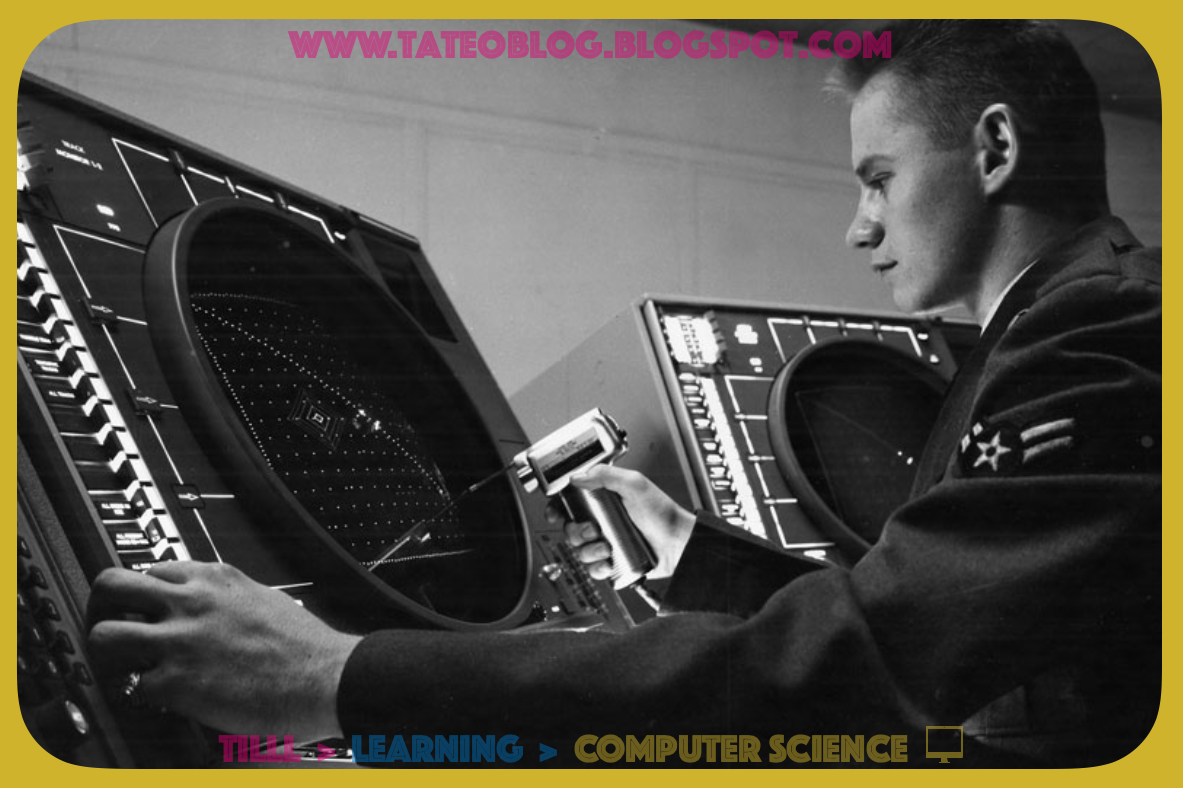
Computer Graphics origins

{Le origini della Grafica Computerizzata}


  The origins of computer graphics are to be found in the context of military research, similarly to what has happened for many other sectors that have taken shape in the field of information technology, such as Operations Research. The graphic capabilities of computers also contributed to their diffusion, expanding their application outside the military, for example in the visual arts.
  {Le origini della grafica computerizzata  vanno ricercate nel contesto della ricerca militare, analogamente a quanto è avvenuto per molti altri settori che hanno preso forma nell’ambito dell’informatica, come per esempio la Ricerca Operativa. Anche le capacità grafiche dei calcolatori contribuirono alla loro diffusione, ampliandone l’applicazione al di fuori dell’ambito militare, per esempio nelle arti visive.}

  In the early 1950s, research into the development of the first digital electronic calculators was funded by the US military. During one of these projects it was observed, almost accidentally, how these computers had particular graphic abilities and could therefore transform numerical data into graphic information, thus paving the way for the birth of computer graphics.
The discovery of the graphic possibilities of computers has also contributed to expanding the boundaries of information technology. However, several years will have to pass before these graphic potentials are transformed into the first practical applications.
  {All’inizio degli anni ’50 fu finanziata dalle forze armate degli USA una ricerca sullo sviluppo dei primi calcolatori elettronici digitali. Durante uno di questi progetti fu osservato, quasi accidentalmente, come questi elaboratori avessero particolari capacità grafiche e potessero quindi trasformare dati numerici in informazioni grafiche, aprendo in questo modo la strada alla nascita della computer grafica.
La scoperta delle possibilità grafiche dei calcolatori ha contribuito anch'essa  ad ampliare i confini dell’informatica, Tuttavia dovranno passare diversi anni prima che queste potenzialità grafiche si trasformino nelle prime applicazioni pratiche.}

Hashtag keywords#computerScience #computerGraphics #CG #TateoBlog #TILLL


Extract from: The graphic representation by means of the modern technologies of electronic computing, TILLL-Learning


_____________________________________________________________________________

Tateo’s Interdisciplinary Lifelong Learning Project

T I L L L

LEARNING - SHARING - NETWORKING

Learning, knowledge sharing and communities engagement about:

Artificial Intelligence; Augmented, Virtual and Mixed Reality; Automation; Electronics; Computer Science and Information Technology; Mobile Technologies; Problem Solving; Readings; Social Media; Modeling and Simulation; Artificial Vision; Hard and Soft Work Skills.

by Tateo Giovanni Battista

_____________________________________________________________________________

TILLL~Blog © November 19, 2021

lunedì 15 novembre 2021

The Makers

{Gli artigiani digitali}


  Digital artisans, or simply "Makers", as they are commonly called, constitute a cultural movement of current times, and represent an extension, on a technological basis, of the traditional world of "do it yourself". Among the typical interests of the makers are engineering projects, such as electronic equipment, robotic designs, devices for 3D printing, and numerical control equipment.
The birth of the digital craft subculture is closely associated with the birth of hacker spaces, that is, spaces for collaborative innovation.
  {Gli artigiani digitali, o semplicemente "Makers", come sono comunemente chiamati, costi­tuiscono un movimento culturale dei tempi attuali, e rappresentano un'estensione, su b­ase tecnologica, del tradizionale mondo d­el “fai da te”. Tra gli interessi tipici­ dei makers vi sono le realiz­zazioni di tipo ingegneristico, come per esempio le app­arecchiature elettroniche, le realizzazioni­ robotiche, i dispositivi per la stampa 3D­, e le apparecchiature a controllo numerico­.
 ­La nascita della subcultura dell'artigia­nato digitale è strettamente associata a­lla nascita di spazi hacker, ovvero di s­pazi di innovazione collaborativa.}

Makers are people who change mechanisms and components, economic models, and housing solutions, in order to discover new ways to get by and live happily even when the economy ends up in the toilet.”

{I makers sono gente che modifica mecc­anismi e componenti, modelli economici, ­e soluzioni abitative, al fine di scoprire modi­ nuovi per tirare avanti e vivere felici anche­ quando l'economia va a finire nel cesso­.}

(cit. Cory Doctorow, Canadian-British blogger, journalist, and science fiction author who served as co-editor of the blog Boing Boing)

Hashtag keywords#electronics #makers #DIY #hacker #collaborativeInnovation #TateoBlog #TILLL


Extract from: Digital Artisans (Makers) and Digital Manufacturing Laboratories (Fab-Lab), TILLL-Learning


_____________________________________________________________________________

Tateo’s Interdisciplinary Lifelong Learning Project

T I L L L

LEARNING - SHARING - NETWORKING

Learning, knowledge sharing and communities engagement about:

Artificial Intelligence; Augmented, Virtual and Mixed Reality; Automation; Electronics; Computer Science and Information Technology; Mobile Technologies; Problem Solving; Readings; Social Media; Modeling and Simulation; Artificial Vision; Hard and Soft Work Skills.

by Tateo Giovanni Battista

_____________________________________________________________________________

TILLL~Blog © November 15, 2021

sabato 13 novembre 2021

Smart Grid

Le reti intelligenti


  Conventional power grids, as we know them, are used to continuously distribute huge amounts of energy from production plants to consumers. The control of this energy distribution is centralized, and the flow of energy does not vary over time.

The automation model for the management of conventional networks is no longer suitable for managing the new energy needs that require a more rational and efficient management of energy, but above all the possibility of integrating the precious contribution of distributed generation. Therefore, the task required of the network automation system is not limited to the management of distribution, but also consists in the management of distributed energy generation, which can take place for example by means of alternative and renewable sources whose contribution, notoriously discontinuous and unpredictable, it necessarily requires intelligent and real-time management.

  {Le reti elettriche convenzionali, così come le conosciamo noi, sono utilizzate per distribuire ininterrottamente enormi quantità di energia dalle centrali di produzione ai consumatori. Il controllo di questa distribuzione di energia è centralizzato, ed il flusso dell’energia non varia nel tempo.

Il modello di automazione per la gestione delle reti convenzionali non è più adatto per gestire le nuove esigenze energetiche che richiedono una gestione più razionale ed efficiente dell'energia, ma sopratutto la possibilità di integrare il prezioso apporto della generazione distribuita. Quindi, il compito richiesto al sistema di automazione della rete non si limita alla gestione della distribuzione, ma consiste anche nella gestione dell generazione distribuita dell'energia, che può avvenire per esempio per mezzo di fonti alternative e rinnovabili il cui apporto, notoriamente discontinuo ed imprevedibile, richiede necessariamente una gestione intelligente e real-time.}


Hashtag keywords#automation #efficiency #sustainability #rationality #distribuitedGeneration #alternativeSources #renewableSources #TateoBlog #TILLL


Extract from: The most modern expressions of the Industrial Automation technology, TILLL-Learning


_____________________________________________________________________________

Tateo’s Interdisciplinary Lifelong Learning Project

T I L L L

LEARNING - SHARING - NETWORKING

Learning, knowledge sharing and communities engagement about:

Artificial Intelligence; Augmented, Virtual and Mixed Reality; Automation; Electronics; Computer Science and Information Technology; Mobile Technologies; Problem Solving; Readings; Social Media; Modeling and Simulation; Artificial Vision; Hard and Soft Work Skills.

by Tateo Giovanni Battista

_____________________________________________________________________________

TILLL~Blog © November 13, 2021

Immersive virtual reality

{La realtà virtuale immersiva.}


"I've seen things you humans couldn't imagine,
battleships ablaze off the Orion ramparts, 
and I've seen B-rays flashing in the dark near the gates of Tannhäuser."

“Io ne ho viste cose che voi umani non potreste immaginarvi,
navi da combattimento in fiamme al largo dei bastioni di Orione,
e ho visto i raggi B balenare nel buio vicino alle porte di Tannhäuser.”

(Roy Batty in “Blade Runner” - Ridley Scott)

  Immersive virtual reality is an environment built "around" the user capable of creating a sensation of sensory involvement and "immersion" in the synthetic environment generated by the computer. To create this "immersive" interaction with the virtual environment, the following peripheral devices are used: viewers, trackers, headsets, wired gloves, cyber-suits.
  {La realtà virtuale immersiva è un ambiente costruito “intorno” all’utente in grado di creare una sensazione di coinvolgimento e “immersione” sensoriale nell’ambiente sintetico generato dal computer. Per la realizzazione di questa interazione “immersiva” con l’ambiente virtuale si utilizzano i seguenti dispositivi periferici: visori, tracker, auricolari, wired gloves, cyber-tute.}

Hashtag keywords: #VR #virtualReality #bladeRunner #TateoBlog #TILLL


Extract from: Let's immerse ourselves in virtual reality, TILLL-Learning


_____________________________________________________________________________

Tateo’s Interdisciplinary Lifelong Learning Project

T I L L L

LEARNING - SHARING - NETWORKING

Learning, knowledge sharing and communities engagement about:

Artificial Intelligence; Augmented, Virtual and Mixed Reality; Automation; Electronics; Computer Science and Information Technology; Mobile Technologies; Problem Solving; Readings; Social Media; Modeling and Simulation; Artificial Vision; Hard and Soft Work Skills.

by Tateo Giovanni Battista

_____________________________________________________________________________

TILLL~Blog © November 13, 2021

domenica 7 novembre 2021

From Genetic Algorithms to Genetic Programming

{Dagli Algoritmi Genetici alla Programmazione Genetica}


  Like any engineering innovation, genetic programming did not emerge fully formed from the aether. Rather it arose from two promising but not yet realized lines of research in computer science: genetic algorithms and artificial intelligence.
  {Come ogni innovazione ingegneristica, la programmazione genetica non è emersa completamente formata dall'etere. Piuttosto è nato da due linee di ricerca promettenti ma non ancora realizzate in informatica: algoritmi genetici e intelligenza artificiale.}

  The mechanism of genetic algorithms is so fascinating that in the nineties some researchers had the idea of extending the evolutionary principle to the internal code of computer programs, effectively creating a population in which individuals are computer programs dedicated to accomplishing the same task.
  {Il meccanismo degli algoritmi genetici è così affascinante che negli anni novanta alcuni ricercatori ebbero l'idea di estendere il principio evoluzionistico al codice interno dei programmi informatici, creando a tutti gli effetti una popolazione in cui gli individui sono programmi informatici dedicati a compiere lo stesso compito.}

“It occurred to me that perhaps the technique of genetic algorithms could be combined with the basic principles of artificial intelligence to evolve a population of programs.“

"Mi è venuto in mente che forse si potrebbe combinare la tecnica degli algoritmi genetici con i principi  di base dell'intelligenza artificiale per far evolvere una popolazione di programmi."
 
(John Koza, 1998)

  John Koza, to whom the authorship of this new line of research is attributed, has put to use one of the most brilliant intuitions of artificial intelligence. In fact, Koza's thesis advisor at the University of Michigan was John Holland, the man widely considered the father of genetic algorithms.
  Remember that John Holland was a university student from Michigan in the 1950s and that upon coming across a book on genetics called "The Genetical Theory of Natural Selection", written by the British biologist Ronald Fisher in 1930, he had the intuition to apply the principles the evolution of the species, and in particular of natural selection, for the heuristic solution of complex problems. The book, in fact, expounded, in rigorous mathematical terms, the basic mechanism of variation in plants and animals. Holland envisioned a system that through small incremental improvements would generate a good solution in the same way a farmer grows good corn. John Holland's genetic algorithms were in effect the precursors of John Koza's idea, in the same way that Mendelian inheritance was the first step towards understanding Darwinian evolution.
  {John Koza, a cui si attribuisce la paternità di questa nuova linea di ricerca, ha messo a frutto una delle più brillanti intuizioni dell’intelligenza artificiale. Infatti il relatore di tesi di Koza all'Università del Michigan fu proprio John Holland, l'uomo ampiamente considerato il padre degli algoritmi genetici.   
  Si ricordi che John Holland era uno studente universitario di Michigan negli anni 50’ e che imbattendosi in un libro di genetica  intitolato “The Genetical Theory of Natural Selection”, scritto dal biologo inglese Ronald Fisher nel 1930, ebbe l’intuizione di applicare i principi della evoluzione della specie, ed in particolare della selezione naturale, per la risoluzione euristica di problemi complessi. Il libro, infatti, esponeva, in termini matematici rigorosi, le basi meccanismo di variazione nelle piante e negli animali. Holland immaginò un sistema che attraverso piccoli miglioramenti incrementali, avrebbe generato una buona soluzione  nello stesso modo in cui un contadino coltiva un buon mais. Gli algoritmi genetici di John Holland sono stati a tutti gli effetti i precursori dell’idea di John Koza, nello stesso modo in cui l'ereditarietà Mendeliana è stato il primo passo verso la comprensione dell'evoluzione Darwiniana.}

  John Holland practically implemented the idea of genetic algorithms in 1980 together with his student David Goldberg, applying it in particular to pipeline optimization. Goldberg, in fact, before working on his PhD, had studied civil engineering, and was interested in the practical problem of how computers could be used to optimize pipeline capacity.
  {John Holland implementò praticamente l’idea degli algoritmi genetici nel 1980 insieme al suo studente David Goldberg, applicandola in particolare alla ottimizzazione dei gasdotti. Goldberg, infatti, prima di lavorare al suo dottorato di ricerca, aveva studiato ingegneria civile, ed era interessato al problema pratico di come i computer potessero essere usati per ottimizzare la capacità dei gasdotti.}

John Koza's technique that extends the concept of genetic algorithm to the world of programming is known as Genetic Programming (known by the term Genetic Programming in English, and synthetically GP).
Genetic programming, in fact, inspired by the same adaptive principle of biological evolution, searches for computer programs that are able to perform a specific task in an optimal way.
   It should be noted that genetic programming exploits the evolutionary modification of the internal code of programs. So the code and the behavior of the programs are constantly evolving. In practice, GP is a particular machine learning technique. Similarly to what happens for genetic algorithms, it is a heuristic process that does not guarantee a perfect result, but an optimal result that meets certain criteria set by the user.
  {La tecnica di John Koza che estende il concetto di algoritmo genetico al mondo della programmazione è nota col nome di Programmazione Genetica (nota col termine Genetic Programming in lingua inglese, e sinteticamente GP).
La programmazione genetica, infatti, ispirandosi allo stesso principio adattativo dell'evoluzione biologica, ricerca programmi informatici che riescano a svolgere in maniera ottimale un determinato compito.
  Si osservi che la programmazione genetica sfrutta la modifica evolutiva del codice interno dei programmi. Quindi il codice ed il comportamento dei programmi sono in continua evoluzione. In pratica la GP costituisce una particolare tecnica di apprendimento automatico. Analogamente a quanto avviene per gli algoritmi genetici, si tratta di un processo euristico che non garantisce un risultato perfetto, bensì un risultato ottimale che rispetti determinati criteri prefissati dall'utente.}

Hashtag keywords: #GP #geneticProgramming #GA #geneticAlgorithms #Koza #Holland #Goldberg #TateoBlog #TILLL


Extract from: Genetic Programming, that is the extension of the genetic algorithms to the programming world, TILLL-Learning


_____________________________________________________________________________

Tateo’s Interdisciplinary Lifelong Learning Project

T I L L L

LEARNING - SHARING - NETWORKING

Learning, knowledge sharing and communities engagement about:

Artificial Intelligence; Augmented, Virtual and Mixed Reality; Automation; Electronics; Computer Science and Information Technology; Mobile Technologies; Problem Solving; Readings; Social Media; Modeling and Simulation; Artificial Vision; Hard and Soft Work Skills.

by Tateo Giovanni Battista

_____________________________________________________________________________

TILLL~Blog © November 7, 2021

lunedì 1 novembre 2021

The deepening of the theme cited into the post

{L'approfondimento dell'argomento citato nel post}


  The "Tateo~Blog" blog (www.tateoblog.blogspot.com) is the main means used in the Tateo's Interdisciplinary Lifelong Learning (TILLL) project to keep track of lifelong learning activities, and to share the experience with anyone on the net who wants to follow me.
Although the blog already provides a valuable tool to stay constantly updated on the most recent lifelong learning activities, I hope that you will not limit yourself to its consultation, and that you feel the need to deepen the topics mentioned in the posts. For this reason I found it useful to combine the web posting activity on the blog "Tateo~Blog" with a content search activity and the writing of articles dedicated to the organic and structured discussion of the topics. The "Learning" section of the TILLL project is made up of a series of articles divided into thematic areas, each of which is dedicated to one of the topics covered by the project, namely: artificial intelligence, automation, augmented reality, electronics , computer science, reading, mobile devices, problem solving, social media, simulation, computer vision and skills.
  To allow those who feel like it, to deepen the concepts covered in the posts, at the end of each post there is always a hypertext reference to the article in the Learning section which deals with the topic in a broader way, which for reasons of synthesis in the post is only mentioned.

  {Il blog "Tateo~Blog" (www.tateoblog.blogspot.com) è il mezzo principale utilizzato nel progetto Tateo's Interdisciplinary Lifelong Learning (TILLL) per tenere traccia delle attività di lifelong learning, e per condividere l'esperienza con chiunque in rete abbia voglia di seguirmi.
Sebbene il blog fornisca già un prezioso strumento per restare costantemente aggiornati sulle attività più recenti di lifelong learning, io mi auguro che non vi limitiate alla sua consultazione, e che sentiate la necessità di approfondire gli argomenti citati nei post. Per questo motivo ho ritenuto utile affiancare 
alla attività di web posting sul blog "Tateo~Blog", una attività di ricerca di contenuti e di redazione di articoli dedicati alla trattazione organica e strutturata degli argomenti. La sezione "Learning" del progetto TILLL è composta, per l'appunto, da una serie di articoli suddivisi in aree tematiche, ognuna delle quali è dedicata ad uno degli argomenti trattati dal progetto, ossia: intelligenza artificiale, automazione, realtà aumentata, elettronica, informatica, lettura, dispositivi mobili, problem solving, social media, simulazione, visione artificiale e competenze. 
  Per permettere, a chi ne abbia voglia, di approfondire i concetti trattato nei post, al termine di ogni post è sempre riportato il riferimento ipertestuale all'articolo della sezione Learning che tratta in modo più ampio l'argomento, che per motivi di sintesi nel post è solo  citato.}

Hashtag keywords#TateoBlog #TILLL #sharing #lifelongLearning #webPosting


Extract from: The Web Posting, that is the breath of a Blog, TILLL-Learning


_____________________________________________________________________________

Tateo’s Interdisciplinary Lifelong Learning Project

T I L L L

LEARNING - SHARING - NETWORKING

Learning, knowledge sharing and communities engagement about:

Artificial Intelligence; Augmented, Virtual and Mixed Reality; Automation; Electronics; Computer Science and Information Technology; Mobile Technologies; Problem Solving; Readings; Social Media; Modeling and Simulation; Artificial Vision; Hard and Soft Work Skills.

by Tateo Giovanni Battista

_____________________________________________________________________________

TILLL~Blog © November 1, 2021

Translate

🧠 L'Hype dell'Intelligenza Artificiale: tra realtà e aspettative

🧠 AI  /  Hype Molti osservatori sostengono che l'entusiasmo e le aspettative che oggi accompagnano l'Intelligenza Artificiale siano...

Most popular posts in the last week.